 Jamie Weston
Your Software Vendor Just Had a Bad Earnings Call and Renewals Are Awkward. Good.
February 9, 2026
I got in at 7:30 this morning. My dad got in at 7:15. I don't know how he does it. I noticed the light already on under his office door and just sat down at my desk and opened my laptop like I'd been there for an hour. Normal morning.
The first thing I read was a coverage note about Thryv - the small business SaaS company that just posted Q4 2025 results. They beat on SaaS subscribers but missed on earnings. The stock moved. Their CEO acknowledged, according to reporting, the need to address cost management. And somewhere, I am absolutely certain, there is a customer of theirs sitting on a renewal email that came in two weeks ago, trying to figure out what to do with it.
This is the situation a lot of B2B software buyers are in right now. Your vendor is struggling. Their earnings call was rough. Their stock is down. Their customer success team is suddenly very available. And yet most businesses in this position will still just... renew at list price, say thank you, and move on. I think that's a mistake. And I think the entire industry has trained buyers to make exactly that mistake.
The Numbers First, Because They Matter
Here is what the SaaS market actually looks like right now. We've written about the broader SaaSpocalypse picture, but the specifics keep getting more specific.
The sector that was growing at 21% annually a few years ago is now growing at 12%. According to a BDO analysis of 115 publicly traded SaaS companies, enterprise SaaS growth fell to just 10% in 2024 - and Q1 2025 came in at negative 2% sector-wide. That's not a blip. That's a pattern.
Aggregate quarterly net new ARR across the cloud software universe dropped to $1.65 billion in Q1 2025, down from $2.33 billion in Q1 2024. That's a 29% year-over-year decline. The brief resurgence in Q2 2024 evaporated. The trend is holding.
At the same time - and this is the part that doesn't get talked about enough - the saturated SaaS landscape, combined with tighter budgets, has led to more aggressive discounting, price-matching against competitors, multi-year deals with reduced rates, and customers negotiating cost-neutral renewals.
So vendors are under pressure. Growth is down. New logo acquisition is harder. And the response from a large chunk of the market has been to squeeze existing customers harder at renewal time. Salesforce's pricing moves now represent up to 72% of their go-forward growth - not new customers, not expansion, just charging existing customers more. Think about that for a second. Three-quarters of growth from a company that size is coming from people who already said yes. That's not a growth strategy. That's a pressure campaign.
The Renewal Call Is a Negotiation. You're Just Not Treating It Like One.
Derek stopped by my desk last week to tell me that the Disney-era Star Wars is actually the correct Star Wars and the originals are "too slow." I told him that was insane. He said I was too attached to nostalgia. We went back and forth for eleven minutes. I have no idea how he's so confident about something so wrong.
Anyway, the point is: Derek has more conviction arguing about Star Wars than most B2B buyers bring to a software renewal conversation. And that's a problem, because 83% of successful renewal negotiations now start at least 120 days before the renewal date - not because customers are being strategic, but because they need that much time to build a case for alternatives and create real negotiating leverage.
Most people I know start the process when the invoice shows up.
Renewal conversations have become, in some cases, what one piece of industry commentary described as "hostage negotiations" - artificial urgency, pricing windows that expire, access threatened. And it works, because buyers are not prepared for it. The vendor's customer success manager has been through this exact call forty times. You've been through it twice, maybe, and one of those times you just clicked the link in the email without calling anyone.
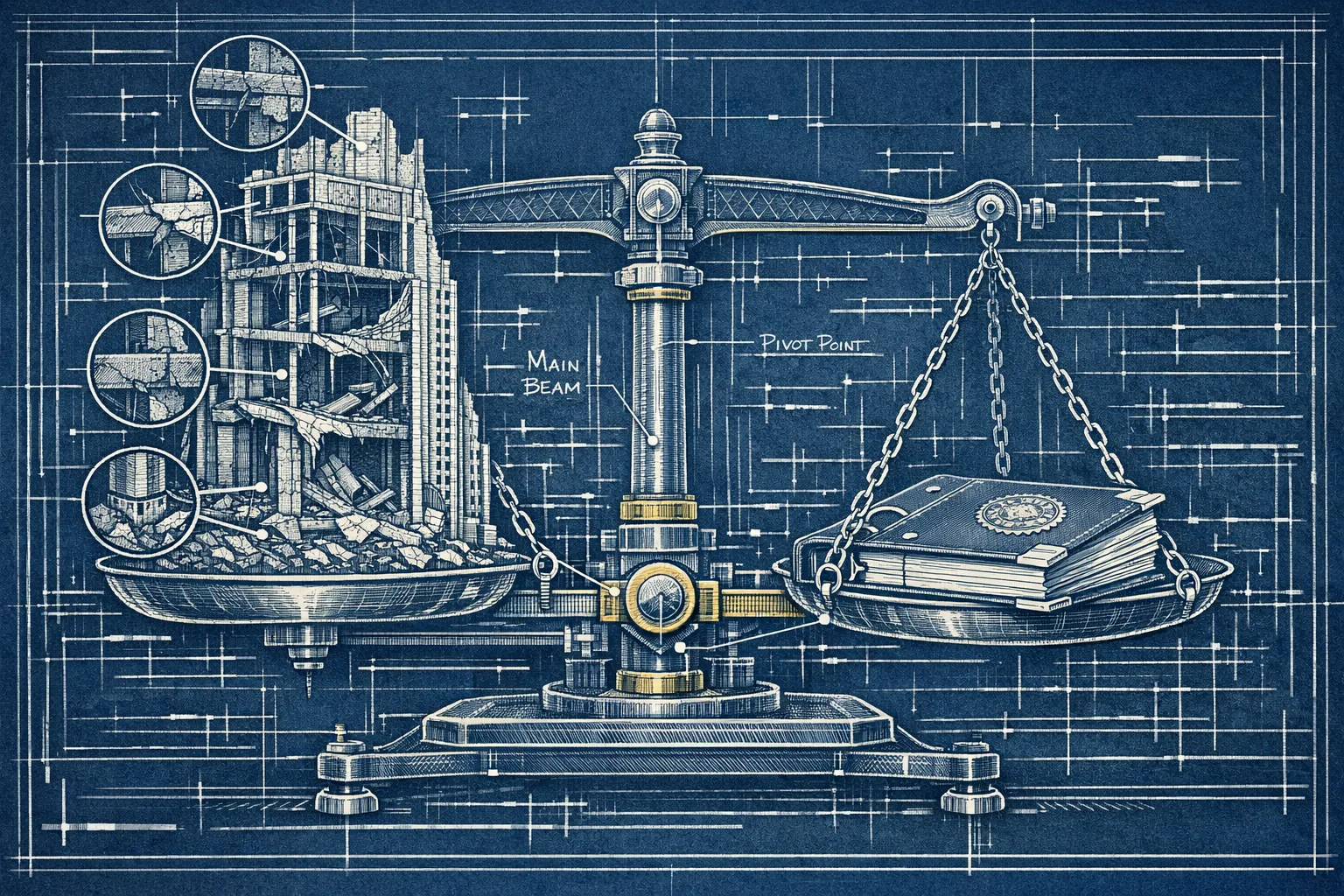
When your vendor just had a bad earnings call, that changes the math. Where SaaS companies once benefited from "land and expand," today's environment has shifted to "prove and justify." The company needs your renewal more than they did in 2021. Their CFO needs that NRR number. Their investors are watching churn closely. You have more leverage than you're using.
What the Vendor's Earnings Call Actually Tells You
When a publicly traded software vendor misses earnings, or when a private one is visibly having a hard quarter - layoffs, leadership changes, a PR push that feels desperate - there are a few things that are almost certainly true about your renewal conversation.
First, their Customer Success team has been reorganized or is under pressure. Customer Success has effectively become a sales team with a friendlier title - every QBR is a pitch deck, every check-in is a cross-sell attempt. Understand that dynamic before you get on the call. The person you're talking to is measured on renewal rate and expansion revenue, not on whether you succeed with the tool.
Second, their room to discount just got wider. Discounting directly compresses margins and drags down SaaS year-over-year growth, forcing companies to trade revenue for renewals. They know this. They'll still do it if you ask. They'd rather have your revenue at a discount than not have it at all, especially in a quarter where they need to show stabilized NRR to investors or board members.
Third, 60% of vendors deliberately mask rising prices by bundling AI features - adding capabilities you may never use and justifying a 10-20% increase as innovation. If your renewal came with a price hike and a mention of new AI features, ask yourself when you last used any of them. If the answer is never, that's a negotiating point. Say it out loud.
I spent a weekend building out an automated outreach sequence with one of our own tools last fall. Nobody asked me to. I wanted to see how the actual delivery infrastructure held up under volume. I ran 847 contacts through in about three hours. Tracked every metric. My dad saw the report Monday morning and said "good." I'm still thinking about what "good" means when he says it.
The point is I know what we actually use and what we actually get out of it. That's the only position from which you can negotiate with any credibility. If you don't know your own usage numbers going into that call, the vendor does - and they will use that information asymmetrically.
The AI Wild Card That Nobody Wants to Say Directly
There is a bigger structural thing happening underneath all of this. AI poses a structural threat to seat-based models in some use cases and may directly compete with existing products in others - some vendors are already reporting slower growth in seat count as customer companies become more efficient. Bain put it plainly: the market feels frozen, and the growth outlook for many software vendors is uncertain.
Instead of 500 seats, a customer might buy 450 and let an agent do the rest. That doesn't sink the vendor's business case entirely, but it changes the economics - for both sides. If you can honestly say you're running leaner on a tool because your team is using AI to fill some of the gaps, that is now a legitimate thing to tell a vendor at renewal time. A year ago it sounded like an excuse. Today it sounds like a fact pattern they've heard forty times and are not sure how to counter.
We've been having some version of this conversation in our own office. Some of the team is fine with what AI is doing to their workflow. Some aren't. But across the board, the seat counts we'd need for various tools are different now than they were eighteen months ago. That is real negotiating ground. Use it.
Stephanie Would Just Renew Without Reading It
Stephanie has never read a renewal email in her life. I don't say that to be mean - she'd probably agree with it. Cost isn't a category that registers for her the way it does for most people. She renewed something at double the price last year and found out three months later. She said "huh" and moved on.
Most business owners are not Stephanie, but a lot of renewal processes look like they were designed by someone who assumed the buyer is. Auto-renew is on by default. We stress-tested our own software stack the way a lender would look at it and found things that had been quietly renewing for over a year that nobody was actively using. That's not unusual. It's the default state for most organizations.
Some vendors make it difficult to cancel unless you notify them months in advance - miss that window, and you're stuck paying for another year, even if the software no longer meets your needs. This is a deliberate design choice. SaaS vendor and customer negotiations frequently focus on the renewal methods, potential price increases, and growth in use - and these discussions can be particularly challenging given elevated macroeconomic inflationary pressures.
The vendor is not your partner at renewal time. They are your counterpart in a negotiation. That framing matters.
The Uncomfortable Power Shift Nobody Wants to Name
Here is my actual take, clearly stated: the SaaS buyer has more power right now than at any point in the last five years, and most of them are not using it.
Outside of AI-fueled spend, belts are still tightening across the sector. Vendors need renewals badly. The SaaS Capital Index median multiple is down 60% from its 2021 peak, and the companies still trading on growth narratives are under enormous pressure to show retention metrics that actually hold up. Your renewal is on their investor slide deck whether you know it or not.
The companies that are going to get crushed in this environment are the ones that have extracted every dollar and every ounce of goodwill - because once that's gone, there's no switching cost except the product itself. And if a competitor comes along that's 80% as good at 50% of the price, customers will sprint toward the exit.
Linda told me last week I was doing a good job on the vendor tracking framework I put together. I've been running that conversation through my head all week trying to figure out if she meant it or if she was just being Linda. Gerald apparently told her at dinner that he thought I was smart based on nothing except that she mentioned me. That made me feel oddly okay about things for about a day.
But here's what I actually believe: most of the awkwardness in renewal conversations right now exists because buyers don't know they're supposed to negotiate and vendors are banking on that. The vendor that just had a bad earnings call is not going to walk into your renewal conversation and say "hey, our quarter was rough, here's a 20% discount." They are going to send the renewal email, follow up twice, mention that the price is going up next quarter, and see what happens.
What happens should be: you know their numbers, you know your usage, you've talked to at least one alternative vendor, and you open the conversation at 60% of the ask. Not because you're being difficult. Because that's how this works now.
The One Thing That Changes Everything
The only thing that gives you actual leverage in a software renewal is being genuinely prepared to leave. Not performing preparedness. Not saying you looked at alternatives while secretly having no intention of migrating. Actually building out a short evaluation of what moving would cost and what it would take.
I'm not saying you should always switch. Some tools earn their renewals and you'd be stupid to leave just to make a point. But if your vendor just posted a bad quarter, sent you a renewal with a price increase, and their customer success team has become noticeably more sales-y - you should at minimum run a real comparison. Understand what the actual switching cost is, not the inflated version your vendor will quote you when you hint at leaving.
The SaaS gold rush is behind us. The playbook has changed - and the companies changing with it are the ones still growing. That's true for vendors. It's also true for buyers. The buyers who figure out that a bad earnings call is an invitation to have a real conversation are the ones who will look back at this market in two years and realize they locked in surprisingly good terms when everyone else was just clicking renew.
That's the take. The awkwardness is your opening. Use it.