 Linda Park
The Gen Z Leave Cancellation Video Is a Software Problem More Than a Management One
February 26, 2026
By now you've probably seen it or heard about it. A young woman named Simran, already at the airport, films herself explaining that her manager just cancelled her approved leave - the leave she'd requested back in mid-December, for a trip to Vietnam she had fully booked. She had informed her manager about her holiday well in advance, telling him in mid-December she'd be travelling in February. Then, on February 19, while she was already at the airport preparing to board her flight, she received a message saying her leave had been cancelled because of urgent work. Her response was filmed and posted. It went everywhere.
Her blunt remarks, including telling her manager to "behave like a manager", drew strong reactions online. Some people called her unprofessional. Some called her a hero. LinkedIn did what LinkedIn does, which is take something specific and make it generic so everyone can weigh in about their own feelings about work-life balance.
I watched the video on my lunch break on Wednesday - Gerald had made sandwiches and I was eating at my desk, which is a whole thing because he uses that specific grain mustard I don't like and I never say anything. Anyway. I watched it twice. And my first thought wasn't "Gen Z has no work ethic" or "finally someone said it." My first thought was: someone approved her leave and there was no system that stopped a project from being scheduled on top of it. That's not a generation problem. That's a process problem. And at the bottom of every process problem like this, there's either a missing system or a broken one.
What Actually Happened Here
The conflict began roughly a month ago when Simran formally notified her manager of her intention to travel on February 19. According to her account, the leave was initially granted, providing her the green light to finalize international bookings and logistics. However, in a move that many labor advocates describe as a hallmark of "hustle culture," the company attempted to cancel the approved time off at the eleventh hour.
Simran said she would have taken her laptop with her and worked remotely if she had been told earlier in the day. That's the line that nobody is talking about enough. She wasn't refusing to be a team player. She was refusing to absorb a management failure at the last possible moment, after she'd already made it to the airport. There's a meaningful difference.
One commenter put it plainly: "You don't approve someone's leave and then cancel it last minute, wrecking their travel plans or personal commitments. That's not leadership, that's poor planning. If a manager grants leave, the backup plan is the manager's responsibility. Period."
And here's where I'm going to say something that's going to annoy the people who want this to be a simple generational story: they're right. Not Simran specifically - I don't know Simran, I don't know her company, I don't know if there's context missing. But the commenter is right in principle. When leave gets approved, the work doesn't disappear. Someone has to plan for it. And if nobody planned for it, that's not the employee's problem to solve at the departure gate.
The Data on Why This Keeps Happening
This video is not a one-off. It's going viral because it's recognizable. Gen Z emerged as the most likely to depart their jobs, with 54 percent saying that they plan on leaving their current place of work, compared to 30 percent in 2024. That's not an entitlement statistic. That's a trust statistic. Emerging research challenges the characterization of Gen Z as disengaged slackers, suggesting that what appears as disengagement may actually represent a rational response to leadership models that have failed to evolve with the workforce. Gen Z workers aren't rejecting work itself - they're rejecting outdated management practices that don't align with their values or provide the structure they need to thrive professionally.
Nearly one-third of Gen Z respondents said they plan to switch jobs in the next six months, an increase from 25 percent in 2024 - a number that more than doubled the 17 percent of participants of all ages who similarly planned to find new work. That's a retention crisis, and it costs real money. A striking trend has recently emerged where new Gen Z recruits are fired just three to six months after starting their first jobs, with data showing that 60 percent of employers have already dismissed at least one recent college hire.
Both sides burning through each other this fast - that's not a culture problem. That's an infrastructure problem. You don't have good coverage planning. You don't have resource visibility. You approve leave without flagging deployment conflicts. And then someone ends up filming themselves at an airport gate, and suddenly it's a news story about generational attitudes instead of a story about why your project calendar and your HR calendar don't talk to each other.
Why I Keep Coming Back to the Software Angle
Here's the thing that bothered me most as I thought about this: manual systems and outdated software platforms not designed to handle leave management don't ease the burden of tracking employee leave - they make it even more complex and challenging for already-busy staff and managers, leaving much to be desired regarding accuracy and efficiency.
I've seen this in our own office. We went a long time with leave approvals happening over email, sometimes Slack, occasionally someone just telling someone else verbally. Tory once approved his own time off by forwarding himself an email thread and marking it resolved. I'm not kidding. The result was the same pattern: approved leave that nobody built a coverage plan around, because the approval and the project planning happened in completely separate places, managed by completely separate people who weren't looking at the same information.
Modern leave management tools sync approved absences directly to project and scheduling systems. You can set up different PTO policies and the tool will automatically deduct from balances when time off is approved. Approved absences sync directly with schedule and timesheet data so you don't have to reconcile PTO manually. Some go further: you can set limits for each leave type, add notice periods to avoid last-minute requests, and block off busy dates with blackout rules - and you can even prevent key team members from being off at the same time, so you're never short-staffed when it matters most.
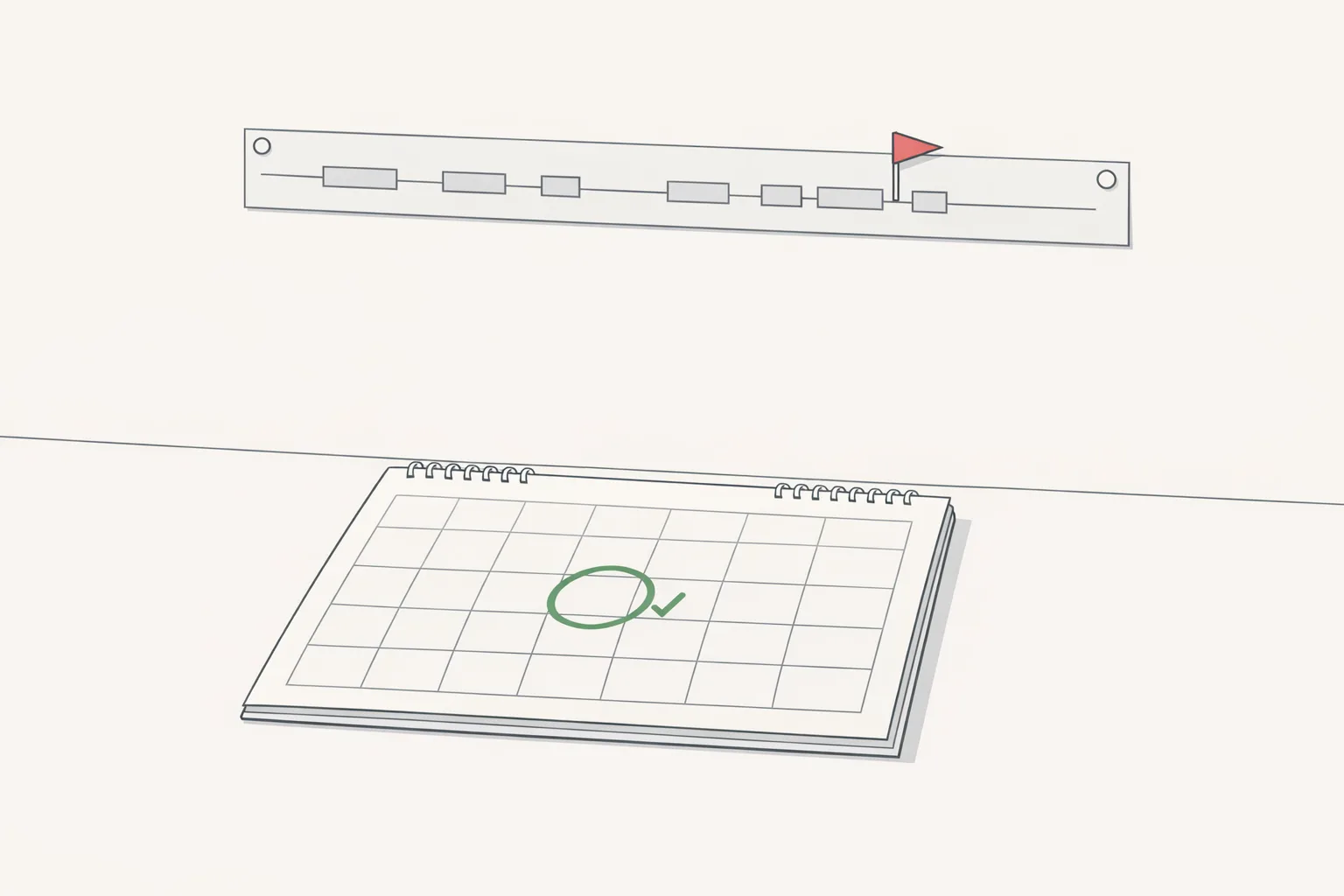
That second one is the feature that would have prevented this entire situation. If there was a project deployment coming on February 19 and Simran was a dependency, the system should have flagged that conflict at the time the leave was requested - in December - not at the airport in February. The manager might have said "I can't approve this specific week, can you push it a week?" And Simran, two months out, might have said okay. That's a manageable conversation. What happened instead was a catastrophic one.
I want to be careful not to make this sound like I'm defending a manager who handled this badly. You can have great software and still make bad decisions. But bad software makes bad decisions almost inevitable. An ineffective means of communicating about leave requests and approvals makes it extremely difficult for employees and their teams to plan for absences. Giving employees and management teams quick access to manage leave requests and approvals is key to ensuring communication and maintaining an efficient leave management process. When leave approval is a manager clicking "approve" in a system that doesn't connect to anything else, you're just collecting paperwork. You're not actually managing coverage.
The "Gen Z Problem" Frame Is Doing Real Damage to Real Businesses
While the spotlight often remains on Gen Z's shortcomings, others argue the real problem is structural. Many workplaces lack robust onboarding, provide little clarity around expectations, and fail to bridge generational differences. That structural problem doesn't fix itself by watching a viral video and concluding that young workers don't care about anything. It fixes itself when you actually look at how leave requests flow from submission to approval to coverage planning - and find where that chain breaks.
Derek spent the better part of a Tuesday arguing that this video proved young workers don't understand sacrifice. I sat there eating the casserole I'd brought in for Gerald's lunch because he'd forgotten it, and I thought: Derek has never once had his own leave cancelled the day of. That tends to affect your perspective.
A key difference in Gen Z's attitude to work is that for them, "work is meant to support a full life, not consume it." Unlike previous generations, who often prioritized work and career above all else, Gen Z is unwilling to accept workplaces that conflict with their values or well-being. You can disagree with that value system all you want. It is still the value system of the people you are trying to hire and retain right now. By 2030, Gen Z is expected to make up 30 percent of the workforce. The question of whether you personally find it admirable is beside the point. The question is whether your operational systems are capable of honoring what you already agreed to - and if they're not, who pays for that failure.
In Simran's case, she apparently decided she wasn't going to pay for it. I understand that. What I also understand is that if her company had a leave system that connected to their deployment calendar, none of this gets to the point of her being at an airport gate receiving a cancellation over a group message. Simran herself described the incident as a communication failure. She's not wrong. But the communication failure started when leave approval and resource planning were living in separate places with no shared visibility.
What This Means If You're Running Something
The businesses I've seen handle this well aren't the ones with the strictest PTO policies or the most enthusiastic company culture. They're the ones where approved leave triggers something - a notification, a calendar block, a flag in the project tool - that makes the coverage gap impossible to ignore before it becomes a crisis.
Taking time off work is essential to prevent burnout and increase productivity, especially since those who experience burnout are 63 percent more likely to take a sick day and 13 percent less confident in their performance than their counterparts. That's not a Gen Z statistic. That's a human statistic. The businesses that treat time off as a threat to manage rather than a commitment to honor end up with both burnout and turnover, and they tell themselves it's because the new generation is different, when really it's because they built systems that make honoring commitments structurally difficult.
If you're looking at your own leave and project management setup and wondering whether this could happen to you, the honest question to ask is: when my team approves leave, where does that information go? If the answer is "into an HR folder that nobody in project management looks at," you have the same problem Simran's manager had. The scale might be different. The airport video might not happen. But the collision between an approved absence and an unplanned dependency will happen eventually. It always does.
There are solid tools that handle this - anything that syncs approved leave to shared team calendars and surfaces coverage gaps before they become crises. The project management software you're already using probably has integrations for this. The HRIS tools built for this do it natively. What they all have in common is that the approval and the planning live in the same system, or at minimum talk to each other. That's not a luxury. That's the whole point.
I'm not saying buy new software. I'm saying: if you're blaming the employee who went to Vietnam for your coverage failure, look at your process first. As one commenter put it: "If a project fails because one person took a pre-approved vacation, that's a management failure, not an employee's lack of ethics. Gen Z is just saying out loud what everyone else has been thinking for decades." That's not a comfortable thing to hear. But I'd rather hear it at my desk than watch it go viral from an airport.
Gerald asked me last night what I was writing about. I said "that video of the girl who went to Vietnam." He said he hadn't seen it. I said he wouldn't have liked it. He asked why. I said because it would have made him feel something and he doesn't enjoy that. He went back to his book. Thirty-one years and I've never been wrong about that.
Simran is on her trip. The comments are still going. And somewhere, a manager is probably writing a company-wide email about professional responsibility that completely misses why this happened in the first place. Don't be that manager. Fix the calendar.