 Linda Park
Software Contracts Are Getting Shorter. Good. They Were Too Long.
March 25, 2026
There's a headline making rounds in B2B procurement circles right now: software contracts are shrinking. Buyers are pushing back against multi-year lock-ins, demanding annual terms, and in some cases monthly flexibility. The framing in most coverage treats this like a surprising twist - some upset in the natural order. I don't see it that way. I see it as long overdue correction, and the vendors who are acting surprised about it weren't paying attention to their own customers.
Let me tell you what the data actually shows, because the picture is more complicated - and more interesting - than the simple "buyers win" narrative.
What Actually Changed
For most of the SaaS boom, vendors held the leverage. If you wanted enterprise software, you signed what they put in front of you. According to Gartner, by 2022, more than 70% of enterprise SaaS contracts exceeded 24 months in duration. That was the norm. Two-year, three-year commitments were table stakes, and the discount they dangled in front of you - usually somewhere between 10 and 20 percent - was just enough to make the finance team feel like they'd done something smart.
Then 2023 happened. Then 2024. Buyers got cautious. Nobody wanted to lock in for multiple years when layoffs were looming and budgets were getting deleted. Flexibility in the face of the unknown mattered more than a few bips of discount. That's not a negotiating strategy. That's survival instinct.
2024 saw increased buyer scrutiny on sellers, with customers closely auditing usage and demanding their software deliver clear outcomes. When those expectations were not met, buyers engaged in tough conversations about value and pricing. Vendr, which processes enormous volumes of SaaS contracts, called it the "Year of the Descope." The second half of the year saw a decline as buyers focused on rightsizing contracts, and Q4 renewal ACVs remained flat compared to Q3, breaking traditional SaaS seasonality trends.
In plain language: companies stopped rubber-stamping renewals. They started asking whether they were actually using what they were paying for. That's not buyer leverage as some new phenomenon - that's buyers doing their jobs.
The Part No One Wants to Talk About
Here's what I find genuinely irritating about the way this story gets told. The coverage focuses heavily on buyers "finally" having leverage, as if the situation was some external force that changed. It wasn't. Buyers had leverage the whole time. They just weren't using it.
I've been in enough renewal conversations to know how this goes. The auto-renewal clause kicks in, nobody checked the calendar, and now you owe another year on software three people use. We had a project management tool at the office for about eight months before anyone realized the subscription had renewed twice on a card Stephanie had put on file when she was testing something. Stephanie, to her credit, didn't blink when she saw the charge. The rest of us were less relaxed about it.
Businesses now spend an average of $7,900 per employee annually on SaaS tools, marking a 27% increase over the last two years. At that number, not reading your contracts carefully isn't a minor oversight. It's a budget problem. The "set it and forget it" approach to software contracts is dead. Smart buyers start renewal conversations six months out and aren't afraid to walk away.
The shift happening now isn't really about contract length. It's about buyers becoming more deliberate. Shorter contracts are a symptom of that, not the cause.
What Vendors Are Actually Doing
This is where it gets interesting. Because vendors are not simply rolling over.
Vendors are getting increasingly creative with how they raise prices: 60% of vendors deliberately mask rising prices by bundling AI features. Customers pay for AI whether they use it or not, and opting out isn't an option. Some are using credit systems where they quietly change the multiplier on what a credit buys - a service that costs 10 credits can rise to 20 credits overnight, same price for your subscription, but you burn through credits twice as fast and hit overage charges much sooner.
Meanwhile, SaaS pricing is up by approximately 11.4% compared to the same time in 2024 - a stark difference from the 2.7% average market inflation rate of G7 countries. So while buyers are winning the contract length battle, they may be quietly losing the pricing war.
And there's a nuance in the data that complicates the "shorter is better" argument. In 2025, the deepest discounts came from short-term contracts at 31.9%, while 12-24 month deals averaged just 26.3%. That's a stark difference from 2024, and worth watching to see if it's a true shift or an anomaly. Tropic, which analyzed over $18 billion in software spend, is noting that vendors may be willing to discount short deals specifically because they expect to recapture value aggressively at renewal once their AI features have matured. Suppliers may be more willing to discount short-term deals knowing that product development is accelerating with AI, and the uplift they can get at renewal is the more important target.
That's a vendor strategy, not a buyer win. Worth keeping that in mind.
The Real Number That Should Bother You
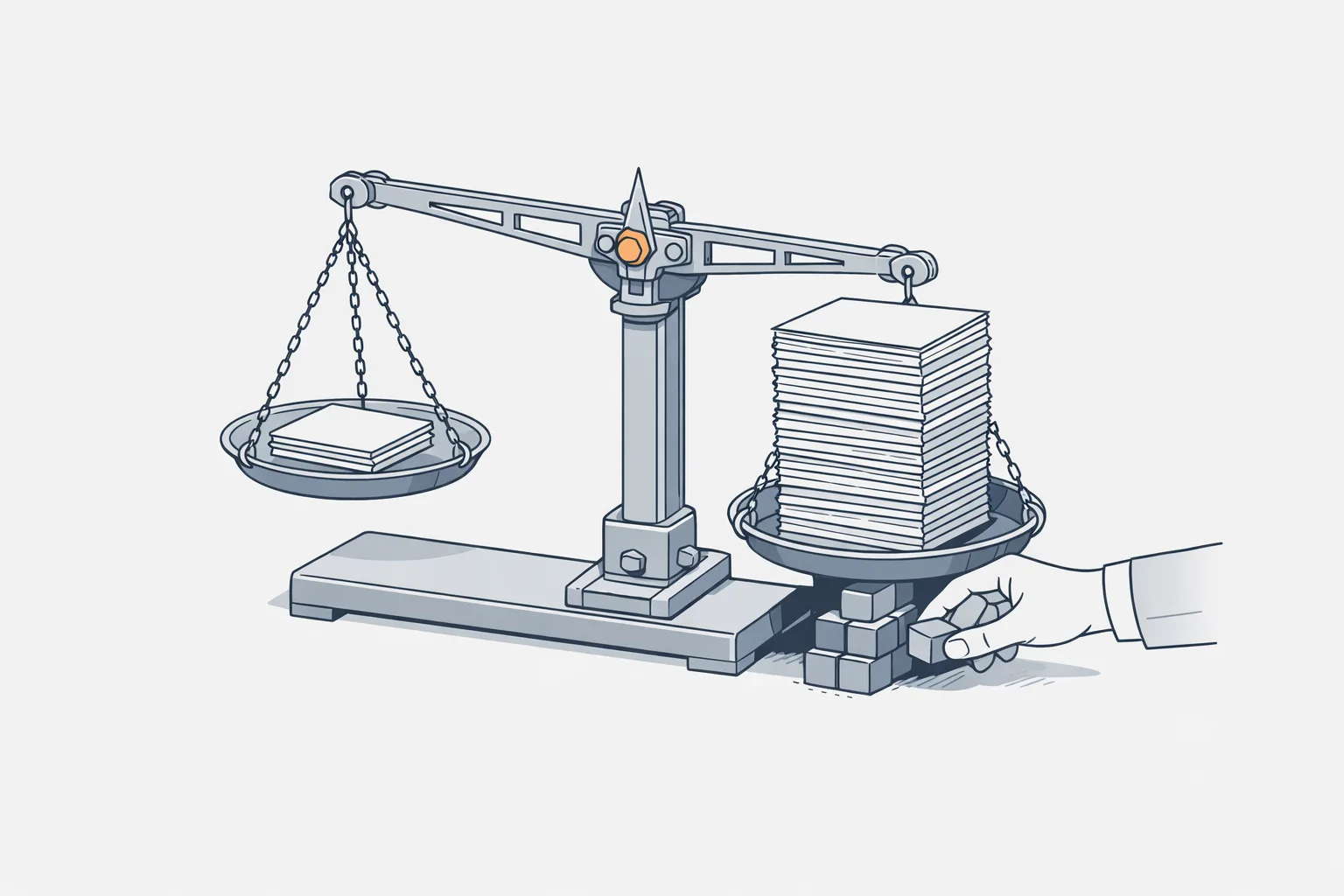
I keep coming back to one data point from Tropic's H1 2025 report. One of the most striking findings involves pricing variability. For similar contracts at similar volumes, there are massive spreads in what companies pay. And to be clear, this is not showing volume discounts. This is about negotiation leverage and timing. The companies paying at the 25th percentile aren't necessarily bigger or buying more. They're often just better prepared.
That tells you everything. The contract length conversation is almost beside the point if you're not showing up prepared. Gerald said something similar once when we were looking at cars - we'd done no research, walked in without a number in our head, and left having spent more than we needed to. He figured it out about two days later. We still argue about it. The principle holds here: the people getting good deals on software contracts are doing homework, not just demanding shorter terms.
Where This Gets Complicated for Smaller Businesses
Most of the "buyers have leverage" coverage implicitly assumes enterprise. Large companies with procurement teams, legal review, SaaS management platforms, dedicated negotiators. That's a different universe from the mid-market company with 40 employees where the person handling vendor contracts is also doing three other things.
Mid-market companies with 251 to 999 employees spent an average of $4.4 million annually on software, up 4% from last year - about $7,300 per employee. That's not a trivial number for a company that size, and it represents real leverage if they choose to use it. The question is whether anyone is actually tracking what's in the stack and when it renews.
Derek, who I work with, spent part of a Tuesday complaining that a tool we use for outreach had quietly changed its pricing model from seats to credits. He'd noticed because the invoice looked different. That is genuinely the kind of attention to detail that saves money, and it has nothing to do with contract length - it has to do with whether someone is actually reading the invoices. Most people aren't. On average, IT owns just 15.16% of spend and 13.45% of apps, with the remaining owned by lines of business and individual employees. That's how you end up with the same tool bought three different ways by three different teams with three different renewal dates.
If you're running a smaller operation, the instinct toward simplicity has real value here. Fewer contracts means fewer renewal surprises. That's not glamorous advice but it's accurate.
The AI Wildcard
There's a specific dynamic forming around AI-native tools that I think changes the calculus for buyers negotiating shorter terms. For AI-native tools, vendors are starting to expect longer commitments. Buyers can use this as leverage to secure strong price protection, with annual uplifts capped at 3-5%.
The problem is that AI tools are changing fast enough that a two-year commitment to something today might mean being locked into something that's already been lapped by a competitor by the time you're halfway through the term. Rapidly evolving feature sets are pushing buyers toward shorter, more flexible contract cycles. That's a legitimate concern, not just negotiating posture.
We've been looking at some AI-native sales tools lately, and the honest answer is that what was impressive eight months ago is now table stakes. I've tested enough of these to know the landscape shifts faster than annual contracts allow you to adapt. There's a version of this where a shorter contract at a slightly worse discount is still the better financial decision over 24 months. The VC money still pouring into AI software is not going to slow down product iteration - if anything it accelerates it, which means buyers are right to want shorter terms on tools that may look completely different at renewal.
What I Actually Think Is Going to Happen
I think the headline - "buyers have leverage" - is half the story and the easier half. The harder story is that that changed in 2025. Multi-year deals are back, and vendors are actually rewarding them again. Multi-year incidence has grown from around 25% of contracts in 2022 to around 30% in 2025.
So here's what's actually happening: buyers pushed for shorter contracts, won that argument in 2023 and 2024, and now vendors have figured out how to use that against them. If you want a meaningful discount, multi-year doesn't just get you a bigger discount - multi-year gets you access to discounting at all. For many suppliers, earning a discount requires more than a single-year commitment. Multi-year is the price of admission.
The companies that will actually come out ahead aren't the ones who demanded shorter terms as a point of principle. They're the ones who treated software procurement as a real function with dedicated attention, who tracked usage data and showed up to renewal conversations with numbers in hand. Usage data showing actual adoption versus paid licenses provides right-sizing leverage. Competitive alternatives demonstrate you're monitoring the market even if switching is painful.
I made Gerald's chicken casserole on a Sunday a few weeks ago - the one he's had since his mother made it - and after dinner he sat down and spent two hours auditing our home subscriptions. Just on his own initiative. Found four things we weren't using and one we had twice under different email addresses. The point being: the leverage isn't complicated. It just requires actually looking.
Shorter contracts are a good development. The right contract length for something you haven't fully evaluated is short - that's just sensible. But if you think the contract length is the variable that determines whether you're getting good value from your software spend, you're focusing on the wrong thing. Increased buyer scrutiny on sellers, with customers closely auditing usage and demanding their software deliver clear outcomes - when those expectations are not met, buyers are engaging in tough conversations about value and pricing, showing a growing willingness to explore alternative solutions.
That willingness to explore alternatives is the leverage. Not the number of months on the contract. The vendors who are nervous right now aren't nervous because contracts got shorter. They're nervous because buyers finally started paying attention. Those are different problems, and only one of them is solved by a different term length.
The ones selling tools that actually deliver measurable value? They're not that worried. And honestly, they shouldn't be. If your software is genuinely useful, a 12-month contract isn't a threat - it's a renewal opportunity. The vendors fighting hardest to keep buyers locked in long-term are usually the ones least confident in what happens when the buyer can walk.
That's not a coincidence.