 Linda Park
The Software Industry Isn't Dying. It's Just Terrified and Acting Weird.
March 12, 2026
I've been watching the software industry for a long time now, and I've seen it do some odd things. But what's been happening over the past year or so has a very specific flavor to it. It's not the flavor of a dying industry. It's the flavor of a very large, very successful industry that just heard something it didn't want to hear, and is now doing what people do when they're scared: making abrupt decisions, talking too loud, and charging extra for things nobody asked for.
Let me just walk through what's actually been happening, because the headline version - "software is dying" - is wrong, and I want to explain why I'm confident about that.
The Satya Nadella Moment That Started Everything
It started, in a way, with a podcast. In December 2024, Microsoft CEO Satya Nadella declared on the BG2 podcast that "SaaS is dead." Those few lines in an almost ninety-minute podcast created a bit of a mini firestorm, because if you take Satya's words literally, you could interpret that he implied AI agents could or would replace SaaS.
Here's the thing though. The actual message is more subtle and more relevant to companies than the provocative headline. Nadella does not describe the end of the SaaS genre, but rather a change in the level of interaction. He was making a point about architecture - about how AI agents might sit on top of existing data systems and make the click-through interface layer mostly irrelevant. He was not predicting that Salesforce would evaporate by spring.
But the damage was done. The industry heard "SaaS is dead," ran with that, and has been acting strangely ever since.
The Numbers Are Strange If You Look at Them Together
Let me put some of what's been happening side by side, because I think you'll see the pattern I'm seeing.
On the layoffs side: In 2025, layoffs shifted from correcting for overhiring during the COVID-19 pandemic to adjusting for macroeconomic pressures and increased AI adoption. Globally, nearly 245,000 tech jobs were cut in 2025, with about 70% of those layoffs stemming from U.S.-headquartered companies. AI was cited as the reason for nearly 55,000 layoffs in 2025, according to Challenger, Gray and Christmas.
On the stock side: The SaaS index, representing companies that sell subscription-based software to enterprises, fell 6.5%, compared with a 17.6% rise in the S&P 500. Meanwhile, the SEG SaaS Index, which tracks the share price performance of publicly traded SaaS companies, was already down 12.1 percent at the end of October 2025, while the NASDAQ 100 rose by 17.9 percent and the S&P 500 by 14.2 percent during the same period.
And on the pricing side - this is the part that gets me - Salesforce raised prices by an average of 6% across its Enterprise and Unlimited Editions starting August 1, 2025, while simultaneously launching new AI-focused product tiers that significantly expand the cost structure for its platform. That's the second notable hike in two years. Salesforce last raised its prices in August 2023, adding around 10 percent to bills across a range of products, saying the extra AI it was baking in justified the cost increases.
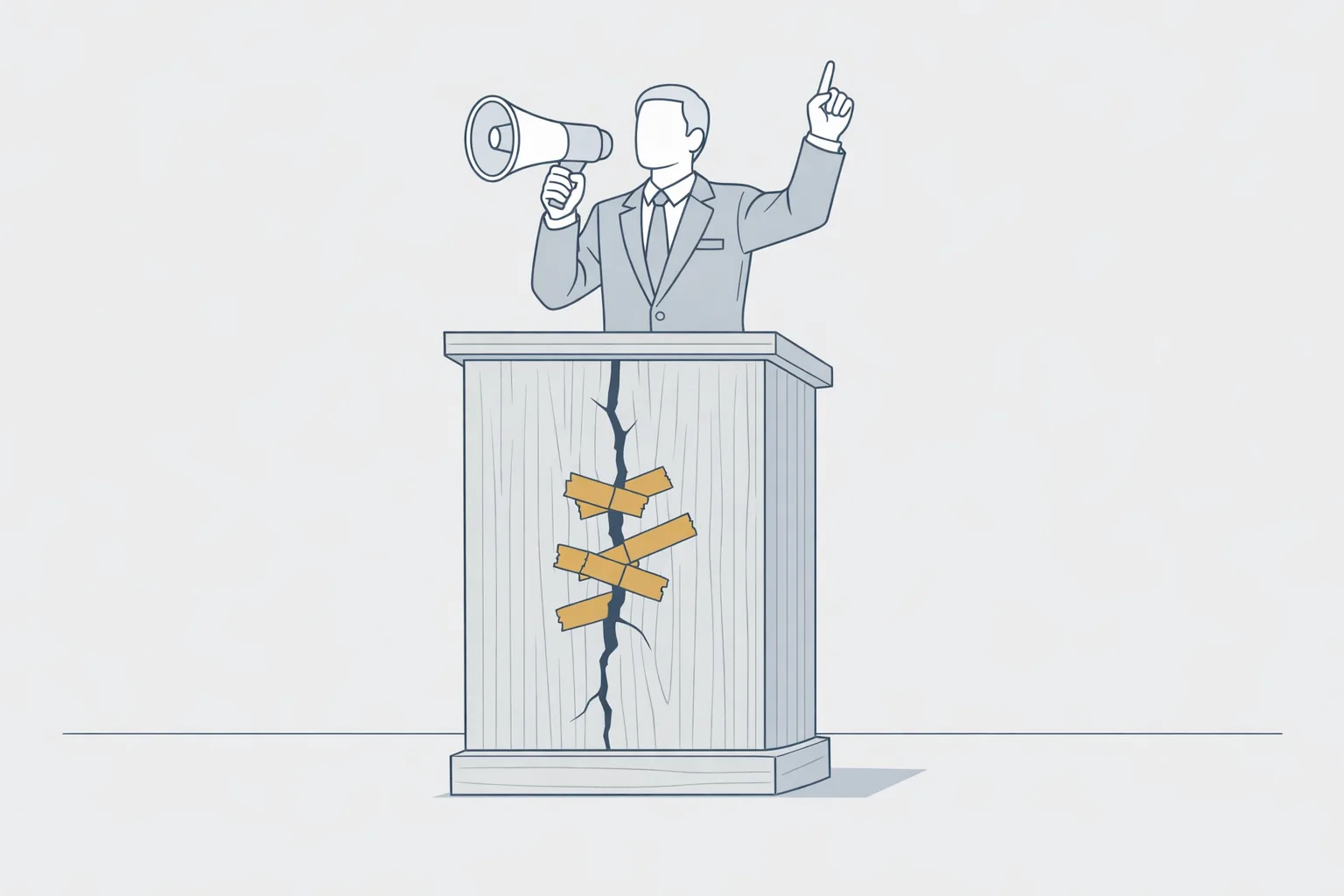
So the industry is cutting thousands of workers, watching its stock underperform dramatically, and raising prices. At the same time. That is not what a confident industry does. That's what a nervous one does.
Gerald made an observation once that has stuck with me. We were at Costco and he picked up a brand of pasta sauce he didn't recognize, and the price was somehow higher than the one we always buy. He put it back and said, "When they start charging more for the version you've never heard of, something's gone wrong." He wasn't talking about software. He's never talked about software in his life. But I thought about it when Salesforce's Agentforce add-ons came out starting at $125 per user per month, with premium editions beginning at $550.
The Real Fear Underneath All of It
Here's my actual read on what's happening. The software industry - particularly the SaaS layer of it - built its entire model around a very simple economic logic: charge per seat, grow headcount at customers, expand contracts year over year. It worked beautifully for about fifteen years.
AI broke that logic. Multiple SaaS companies reported slowing growth in Q4 2025 earnings, not because AI failed to boost productivity as expected, but precisely because it succeeded too well. Customers are reducing software seats rather than adding them, as AI-enhanced workers accomplish more with fewer licenses.
Workday's situation spells this out almost painfully clearly. Workday is confronting a troubling reality: customers aren't hiring much, and some are actively cutting staff. Since Workday's revenue model depends on per-employee seat licenses, stagnant or declining customer headcount directly threatens growth. Their CEO's response, according to The Register, was blunt: "We're focused not just on seats, but actually revenue per seat."
Revenue per seat. That is the polite way of saying: we can't sell you more seats, so we're going to charge more for each one you already have. I've sat through enough vendor renewal conversations to know that energy. It's not confidence. It's desperation wearing a blazer.
Tory - our office life coach, who recently lost both his wife and his car in what he describes as "back-to-back growth opportunities" - actually said something useful about this. He said people become most controlling right when they feel least in control. I thought he was talking about himself. But I think he was accidentally describing the SaaS pricing committee.
The Behavior Is Telling
The behavior companies are exhibiting right now has a very recognizable shape. It's the shape of a business that doesn't fully believe its own pitch.
Customers say they would prefer to buy AI-enabled solutions from their incumbent vendors. They trust them. They know they are secure. They believe they will be around for the long term. But most incumbents have yet to deliver compelling offerings or prove they can win this new spending.
That's from Bain. Customers are basically saying: please let us stay with you, just give us a reason. And the vendors are responding by raising prices and launching product tiers that nobody has asked for. There's even internal research from Salesforce itself suggesting its AI agents weren't exactly reliable. Research led by one of Salesforce's own researchers found that LLM agents could only get a single-function task right 58 percent of the time, and that fell to 35 percent if a task needed multiple steps.
And yet the marketing doesn't mention any of this. I asked Derek once - our colleague who somehow hates the original Star Wars trilogy and has strong opinions about everything - whether he'd noticed how none of the AI product announcements ever include error rates. He said he hadn't noticed and then told me about how Rogue One was actually the peak of the franchise, so I let it go.
The point is: companies are being asked to pay significantly more for tools that their vendor's own researchers acknowledge aren't hitting 60% accuracy on basic tasks. That is a strange situation. And I think it's producing a very specific kind of distrust that's going to matter more as we get into 2026. We wrote about what happened when we asked vendors directly if AI would kill their product, and the answers were genuinely revealing about how much uncertainty lives inside these companies right now.
Who Actually Has Something to Lose Here
I want to be precise about this, because "software is dying" is too blunt and "software is fine" is too complacent. The actual picture is more specific.
Point solutions, single-purpose workflow tools, document generation software, simple project management, and basic analytics tools face the highest replacement risk. That part is real. The lighter, thinner category of tools - the ones that do one thing and charge $15 a user a month for it - those are genuinely vulnerable. Gartner has predicted that 35% of point-product SaaS tools will be replaced by AI agents by 2030.
But the deeper systems? "Sticky" software, such as ERP and CRM systems that organizations have relied on for years and invested tens or hundreds of millions of dollars into, will not be discarded overnight. And the total market picture doesn't exactly support the apocalyptic narrative: enterprises spend tens, if not hundreds, of millions of dollars on SaaS software for core capabilities across front-, middle-, and back-office workflows, and global SaaS spending is projected to rise from $318 billion in 2025 to $512 billion in 2028.
$512 billion by 2028 is not what a dying industry looks like. It's what a reshaping industry looks like. And I think that distinction matters a lot for anyone running a business right now and trying to make smart decisions about what to keep, what to drop, and when to renegotiate. We did our own software audit last year and it got uncomfortable fast - there's a piece on that here if you're curious what that process actually looks like.
The Pricing Model Is the Real Crisis
If I had to identify the one thing that I think is actually breaking - not as a metaphor, but structurally - it's the per-seat pricing model. That's not dying. It's already broken.
Per-seat pricing assumes one user equals one seat of value, but AI agents break this relationship. When one user with AI can accomplish the work of five traditional employees, the correlation between user count and software value collapses. This creates a pricing crisis where customers achieve exponential productivity gains while vendors capture only linear revenue - or worse, see revenue decline as customers reduce headcount.
IDC is pretty clear on where this goes: by 2028, pure seat-based pricing will be obsolete, with 70% of software vendors refactoring their pricing strategies around new value metrics, such as consumption, outcomes, or organizational capability.
The companies that figure out the new pricing model first will be fine. The ones that keep raising per-seat prices while seat counts drop are going to have a very uncomfortable few years. With Salesforce's organic growth slowing from historical rates of 25%+ to under 10% in recent quarters, price increases have become an essential tool for maintaining growth targets. This pattern likely extends across the industry, with mature SaaS companies increasingly relying on price optimization rather than customer acquisition to drive revenue growth. That's not a strategy. That's running out the clock.
I made Gerald his favorite casserole - the chicken and rice one, not the vegetable one he says he likes but doesn't - and while we were eating I tried to explain this to him. How a company could have billions in revenue and still be in a kind of structural trouble. He thought about it for a minute and said, "So they're selling the same thing for more money to fewer people and calling it innovation?" I said that was more or less it. He said, "That's not a business. That's a liquidation sale." Then he had seconds, which I noted.
What This Means for You, Actually
I want to say something concrete here, not vague strategic advice.
The software industry's fear is producing real, measurable changes in pricing, packaging, and contract terms. The Salesforce example demonstrates that these aren't one-time adjustments - they're becoming a regular revenue growth strategy that organizations need to plan for in their long-term budgets. The government's negotiating success shows that even the biggest vendors will cut prices dramatically when faced with real consequences.
That last part is important. When the U.S. federal government pushed back, Salesforce offered 90% discounts. The prices being quoted to your business are not fixed. They're aspirational. And a vendor that's scared - which most of them are right now - is a vendor that negotiates.
If you're running a smaller operation and you've been keeping your software stack mostly on feel and habit, this is actually a good moment to look at it with fresh eyes. Not because everything needs to change, but because the vendors most likely to squeeze you over the next two years are the ones whose underlying growth model is broken. Understanding which of your tools falls into the "point solution" category that's genuinely threatened versus the deeper systems that aren't going anywhere is useful information. We ran a stress test on our own software stack earlier this year that turned up a few surprises, and it came down to asking exactly that question about each tool.
The vendors who are not panicking, by the way, tend to be the ones that are genuinely useful at something specific, have transparent pricing, and aren't spending their marketing budget telling you that AI will change everything. Those companies seem more interested in whether their product works. It's a lower-drama experience. I find I prefer it.
The Industry Will Be Fine. Some Companies Won't Be.
Here's where I land on this, and I'll be direct about it.
The software industry is not dying. SaaS is not dead, but it is metamorphosing. The software industry is entering a new chapter defined by AI, automation, and outcome-based economics. The companies that will struggle are the ones using AI announcements as a cover story for the fact that their core growth model stopped working. The companies that will be fine are the ones with genuine moats - proprietary data, deep vertical integration, compliance complexity that can't be easily replicated - and the honesty to admit that the pricing model has to change.
What I'd watch for: any vendor that raises prices and simultaneously lays off the people who support the product you use. That combination - Workday laid off 8.5% of its workforce, and some analysts fear the cutbacks will affect customer service, unless AI can pick up the slack - is a meaningful signal about how much that company believes in the AI tools it's selling you.
The industry is scared. Scared industries do strange things. They raise prices, cut staff, rebrand products, and make bold claims about transformation on podcasts. None of that means they're dying. It means they haven't figured out the next chapter yet.
Neither have we, honestly. But at least we're not charging extra for the confusion. That puts us ahead of a few people I could name.
For more on how the SaaSpocalypse narrative developed and what it actually means in practice, we wrote about it here: HSBC Named It the SaaSpocalypse. It's a word I can't stop using either.